Explore Abu Dhabi Heritage Village: free entry, traditional crafts, mud-brick homes & souks. Compare guided tours vs self-guided visits and nearby Corniche attractions.
What Is Abu Dhabi Heritage Village
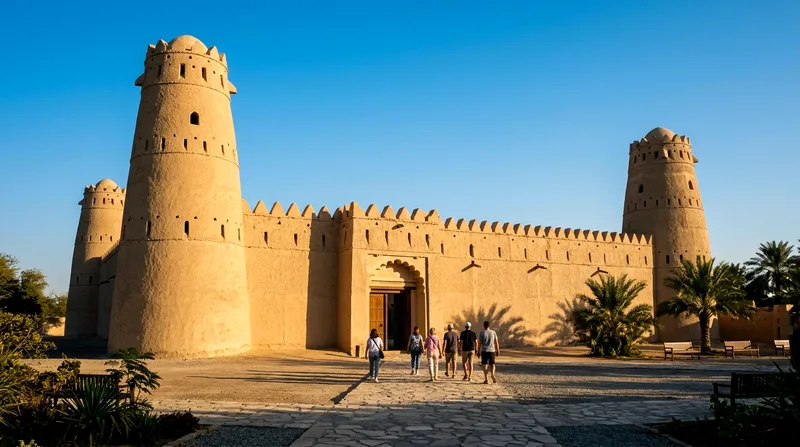
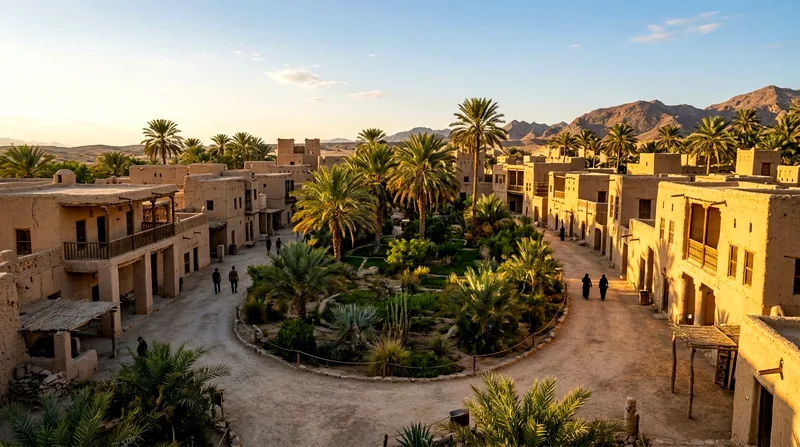
Abu Dhabi Heritage Village sits on the Breakwater, a promontory jutting into the Gulf just off the Corniche, facing the city skyline from across the water. It's a reconstructed settlement — not an archaeological site — built to show what Emirati life looked like before oil money transformed the coastline in the 1960s and 70s. Think mud-brick (or more accurately, lime-and-stone rendered) houses, a reconstructed oasis with date palms, a mosque, and a scatter of workshops where craftspeople still practice weaving, pottery, and metalwork.
It's run as a free municipal attraction rather than a commercial venue, which tells you something about its purpose: this isn't designed to extract ticket revenue, it's designed to preserve a version of pre-oil Emirati identity for both residents and visitors. Some travelers compare it unfavorably to the grander Emirates Heritage Village concept elsewhere in the UAE, or to Al Ain's Al Jahili Fort and oasis sites, which have more authentic historic weight because they sit on original ground. That comparison is fair — Heritage Village in Abu Dhabi is smaller and more staged than Al Ain's heritage sites, and it won't give you the same sense of standing somewhere genuinely old.
Why visit this cultural landmark
If you've only got a day or two in Abu Dhabi and your itinerary is dominated by the Sheikh Zayed Grand Mosque, Louvre Abu Dhabi, and Yas Island, Heritage Village is the cheap, fast way to add social and historical context without eating a half-day. You walk away understanding why wind towers existed before air conditioning, how pearling and fishing shaped coastal Emirati economies, and what a traditional souk actually looked like before glass-and-steel malls took over. It's a 30-60 minute visit, not a half-day excursion, so don't build an entire morning around it.
What makes it unique in Abu Dhabi
Unlike Abu Dhabi's headline attractions — the Grand Mosque, the Louvre, Ferrari World — Heritage Village has no entry fee and no timed-ticket system. It's one of the few places in the city where you can simply walk in. The trade-off is scale: this is a compact site, walkable in under an hour, with far less polish than the big-ticket attractions. If you're expecting Dubai's larger, more theatrical heritage recreations, scale down your expectations accordingly.
What to See and Experience
The site is organized loosely around a central walking loop, so you move through the oasis garden, past the reconstructed houses, into the souk, and finish near a small museum building housing archaeological pieces and old photographs of Abu Dhabi island before development. There's no required order and no turnstile system — you wander.
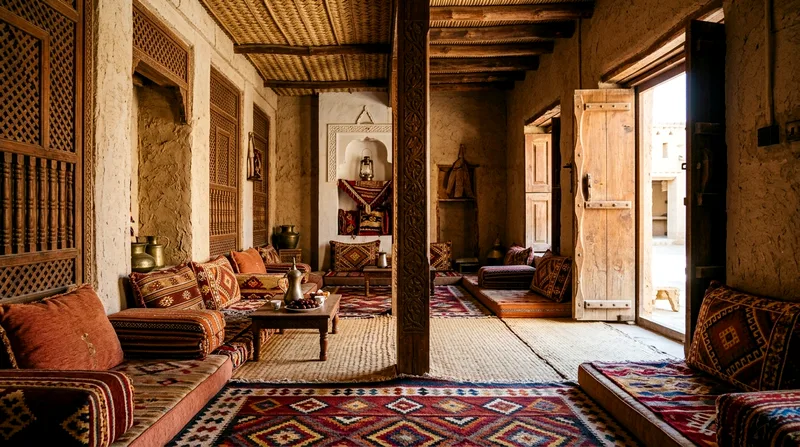
Reconstructed mud-brick buildings and homes
The houses here represent different social strata of pre-oil Emirati life: a sheikh's majlis (reception area), a fisherman's palm-frond barasti hut, and a Bedouin tent setup used by inland desert communities. None of these are original structures — they were rebuilt using traditional materials and techniques specifically for this site — so treat it as an educational reconstruction, similar in spirit to open-air heritage museums you'd find in Europe, rather than a preserved ruin. The barasti huts, woven from dried palm fronds, are genuinely interesting for showing how effective natural ventilation was before electricity.
Traditional crafts and live demonstrations
On most days, you'll find artisans demonstrating skills like Al Sadu weaving (geometric textile patterns traditionally made by Bedouin women), pottery throwing, and sometimes metalworking or henna application. This is the strongest part of the visit — static buildings only tell you so much, but watching someone's hands work a loom gives the history actual texture. Demonstration schedules aren't fixed and can vary by season and staffing, so don't build your whole visit around seeing a specific craft; treat any demonstration you catch as a bonus.
Heritage souk and shopping
The small souk area sells textiles, spices, pottery, and handicrafts — modest in scale compared to the Gold Souk in Dubai or Sharjah's Souk Al Arsah, and pricier buyers should know this isn't where you'll find deep bargains. It's more a browsing-and-photos stop than a serious shopping destination. If you're a committed shopper chasing real finds, save your energy for the Mina Zayed fish and vegetable markets or the malls near the Corniche instead.
Guided Tour vs Self-Guided Visit
This is the real decision point for most readers searching for an Abu Dhabi Heritage Village tour: do you pay for a guide, join a bundled city tour that includes it as a stop, or just walk in on your own? Given the site's free entry and small footprint, the honest answer depends entirely on what else is on your itinerary that day.
A self-guided Heritage Village visit costs nothing and takes under an hour, while guided value mainly comes from bundling it with the Grand Mosque or Corniche.
Abu Dhabi Heritage Village tour options compared: self-guided vs bundled guided visits
| Option | Cost | Typical duration | Best for | Context provided |
|---|---|---|---|---|
| Self-guided walk-in | Free | 30-60 min | Independent travelers, families | Basic signage only |
| Bundled half-day city tour | Paid (varies by operator) | 3-4 hrs total | Couples, first-time visitors | Guide narrative across sites |
| Bundled full-day tour | Paid (varies by operator) | 6-8 hrs total | World travelers wanting depth | Extensive historical framing |
| Private guide hire | Paid, higher cost | Flexible | Luxury travelers, small groups | Tailored, in-depth |
Prices and bundled itineraries vary by operator and season; check current listings before booking.
Self-guided visit: flexibility and cost
Walking in independently costs nothing beyond getting there, and you control your pace entirely. Signage at each building gives basic context in English and Arabic, enough to understand what you're looking at without a guide. For most visitors — especially solo travelers and couples with a loose schedule — this is the sensible default. The downside: without background reading beforehand, you'll likely miss the "why" behind what you're seeing, like why wind towers face certain directions or why barasti huts were seasonal rather than permanent.
Guided tours: added context and value
Dedicated guided tours of Heritage Village alone are uncommon — the site is usually too small to justify a standalone paid tour. What you'll actually find, on platforms like Tours by Locals or through operators such as Excursion Mania, are half-day or full-day Abu Dhabi city tours that bundle Heritage Village with the Grand Mosque, the Corniche, and sometimes Qasr Al Watan. In that context, a guide's value isn't explaining Heritage Village specifically — it's threading it into a bigger narrative about Emirati history and tying it to the mosque visit that typically follows. If you're the type of traveler who reads Lonely Planet or TripAdvisor reviews beforehand and enjoys self-directed learning, skip the guide here specifically and spend that budget on a guided Grand Mosque tour instead, where architectural detail genuinely benefits from expert framing. Compare current guided city tour options and prices before you book, since bundled itineraries change by operator and season.
Admission, Hours & Best Times
Logistics here are simple, which is part of the appeal. There's no booking system to navigate, no app ticket to download, no timed-entry slot to miss.
Free entry and operating hours
Heritage Village has no admission charge — a genuine rarity among free heritage attractions in Abu Dhabi, most of which have some fee attached. It's typically open daily, with hours generally running through the morning and afternoon and sometimes reopening in the evening after a midday closure, though hours can shift around Ramadan or public holidays. Always check current hours on the official Abu Dhabi tourism or municipality listing before you go, since seasonal adjustments do happen. Parking is free and reasonably plentiful on the Breakwater, which is more than you can say for Corniche-adjacent parking during peak weekend hours.
Ideal times to avoid crowds
Go in the early morning, shortly after opening, or in the late afternoon when the heat has dropped — midday between roughly 11am and 3pm from May through September is genuinely uncomfortable outdoors, and this site is almost entirely open-air with limited shade. Weekdays are quieter than Fridays and Saturdays, when local families turn up in greater numbers. Tour groups tend to arrive mid-morning as part of bundled Grand Mosque itineraries, so if you want the place closer to yourself, aim for right at opening.
Combining with Nearby Attractions

Heritage Village's location on the Breakwater is genuinely convenient, and treating it as an isolated destination wastes its best feature: proximity to bigger sights.
Sheikh Zayed Grand Mosque pairing
The Grand Mosque is roughly a 15-20 minute drive away, and this is the most natural pairing — most bundled guided tours already do this for you. Visit the mosque first thing in the morning (it opens early and dress-code checks move faster with fewer crowds), then head to Heritage Village afterward for a lighter, shorter stop before lunch. Doing it in reverse order works too, but the mosque deserves more of your energy and attention, so don't exhaust yourself at Heritage Village first.
Abu Dhabi Corniche add-ons
Heritage Village sits essentially at one end of the Abu Dhabi Corniche, the 8-kilometer waterfront promenade lined with parks, cycling paths, and beach clubs. After your visit, it's a short walk or drive to Corniche Beach for families wanting a swim, or a bike rental stand if you prefer movement over sightseeing. Compare this to Dubai's JBR waterfront — the Corniche is calmer, less commercial, and better suited to a relaxed afternoon than an action-packed one. Seniors and families with young children generally find the Corniche's flat, shaded paths easier going than Dubai's busier beach promenades.
Frequently asked questions
Is Abu Dhabi Heritage Village free to visit?
Yes, entry is free with no ticket or booking required. You simply walk in during opening hours. This makes it one of the few genuinely cost-free heritage attractions in Abu Dhabi, alongside parts of the public Corniche — unlike paid sites such as Qasr Al Watan or Louvre Abu Dhabi.
What can you see at Heritage Village Abu Dhabi?
You'll see reconstructed mud-brick and barasti (palm-frond) houses, a small oasis garden with date palms, a mosque, a heritage souk selling textiles and handicrafts, and workshops where artisans demonstrate weaving, pottery, and sometimes metalworking. A small museum building near the exit displays archaeological finds and historic photographs of Abu Dhabi before development.
How long does it take to visit?
Most visitors need 30 to 60 minutes to walk the full loop at a relaxed pace, including time to browse the souk and watch any craft demonstrations happening that day. It's not a half-day attraction, so plan it as a shorter stop alongside the Grand Mosque or Corniche rather than a standalone outing.
Are guided tours worth it at Heritage Village?
Standalone guided tours of Heritage Village alone are rare because the site is small. Guided value comes mainly from bundled half- or full-day Abu Dhabi city tours that pair it with the Grand Mosque and Corniche — useful if you want narrative context across multiple sites, but unnecessary if you're just visiting Heritage Village on its own.
Can you combine Heritage Village with other Abu Dhabi attractions?
Yes — it sits on the Breakwater near one end of the Corniche and about 15-20 minutes by car from the Sheikh Zayed Grand Mosque. A common, efficient route is Grand Mosque in the morning, Heritage Village and a Corniche walk afterward, finishing with lunch along the waterfront.