Compare guided Abu Dhabi street food tours through souks and local eateries. See tour types, inclusions, group sizes, and what to check before booking.
Who Street Food Tours Suit Best
Street food tours in Abu Dhabi work best for people who want to understand a place through what locals actually eat, not through a hotel buffet labeled "Arabic Night." These tours thread through souks, backstreets near Abu Dhabi Creek, and informal eateries that don't show up on a typical Yas Island itinerary. You'll taste regag bread cooked on a flat griddle, machboos (spiced rice with meat or fish), luqaimat (fried dough balls soaked in date syrup), and often South Asian or Persian dishes that reflect the city's actual demographic mix — Abu Dhabi's food culture is layered, not purely Emirati.
Compare this to Dubai, where street food tours tend to lean harder into Instagram-ready stalls and spice souk theatrics. Abu Dhabi's version is quieter and more residential — you're walking through areas where people actually shop for dinner, not a curated tourist lane. That's a trade-off: less polish, more authenticity, and occasionally a vendor who doesn't speak much English, which the guide bridges.
Solo Travelers and Food Enthusiasts
If you're traveling alone, a street food tour solves the two annoying parts of solo dining abroad: ordering enough variety to actually taste the menu, and finding places that don't look unwelcoming to a single diner. Group tours put you with five to twelve strangers who are also curious, which makes conversation easy without forcing it. Food enthusiasts get more out of this format than almost any other Abu Dhabi activity — you're sampling eight to twelve small portions across two or three venues rather than committing to one restaurant and one dish. The downside: if you already know Emirati and Gulf cuisine well, a beginner-level tour may feel slow. Ask upfront whether the guide can go deeper for experienced eaters.
Groups and Families Seeking Local Culture
Families with older children (roughly ages 8 and up) tend to do well on these tours, since the portions are small and kids can skip anything unfamiliar without wasting a full meal. Younger children often struggle with the walking distance — typically 1.5 to 3 kilometers over two to three hours — and with the later evening start times many tours use to dodge daytime heat. For larger groups of friends or extended family, ask about private bookings; a private version lets you set the pace and skip dishes with allergens, which matters more in a group than it does for a solo traveler.
Main Tour Categories and Formats
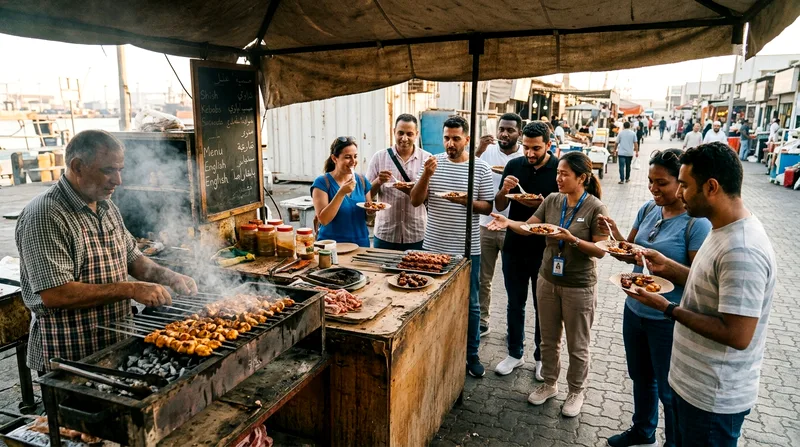
Abu Dhabi street food tours fall into a handful of recognizable formats, and picking the right one matters more than picking a specific operator. The two biggest decisions are group size (shared vs. private) and time of day (daytime/half-day vs. evening souk tour).
Small-group evening walking tours offer the best balance of cost, flexibility, and authentic stops for most travelers.
Abu Dhabi street food tour formats compared: group size, duration, and cost range
| Tour Format | Typical Group Size | Duration | Typical Price Range | Best For |
|---|---|---|---|---|
| Large group walking tour | 15-25 people | 2-3 hours | Lower-cost | Budget travelers, first-time visitors |
| Small group walking tour | 6-12 people | 2-3 hours | Mid-range | Solo travelers, couples, food enthusiasts |
| Private tour | 1-6 people (own party) | 2-4 hours | Higher-cost | Families, dietary needs, special occasions |
| Half-day souk and food tour | 8-15 people | 3-4 hours | Mid-range | Travelers combining shopping with food |
| Food hall / seated-finish tour | 6-15 people | 2-3 hours | Mid-range | Those wanting less standing, more seating |
Typical figures based on common industry patterns; always check current prices and group sizes on the booking platform before confirming.
Group Walking Tours vs Private Experiences
Standard group tours, the kind listed on Viator or TripAdvisor, typically run with eight to fifteen people and a fixed route through two or three neighborhoods. They're cheaper per person and easier to book on short notice, but you move at the group's pace and get less one-on-one guide attention. Private tours — sometimes offered by specialist operators in the style of Frying Pan Adventures, which built its reputation on this model elsewhere in the region — let you customize stops, skip dishes you don't want, and move faster or slower depending on who's in your party. Private tours cost noticeably more, often double the group-tour rate, but for couples celebrating something or families with dietary restrictions, the flexibility is usually worth it. I'd avoid the largest group tours (15+ people) entirely; vendors can't serve that many people quickly, and you end up standing around more than eating.
Half-Day and Evening Souk Tours
Evening tours dominate the market for good reason — Abu Dhabi's heat makes daytime walking tours uncomfortable for roughly seven months of the year, and souk vendors are busiest after sunset anyway. Expect a start time between 5pm and 7pm and a duration of two to three hours. Half-day tours, usually scheduled in the morning, are rarer but suit travelers who want to combine food with a market-shopping component — useful if you're also curious about the textile and spice sections of a souk. A smaller niche covers food-hall-style tours ending at venues like Chuck & Frida Food Hall, which mixes street-food-style stalls with a seated finish — a good option if you want the walking-tour format without standing the entire time.
What's Included in Street Food Tours
Inclusions vary more than people expect, so read the listing carefully rather than assuming every tour covers the same ground. Most reputable tours include all food tastings in the price — generally eight to twelve samples — plus a non-alcoholic beverage like karak tea or fresh juice. Alcohol is rarely included, partly because many stops are in areas without liquor licenses.
Food Tastings and Beverage Samples
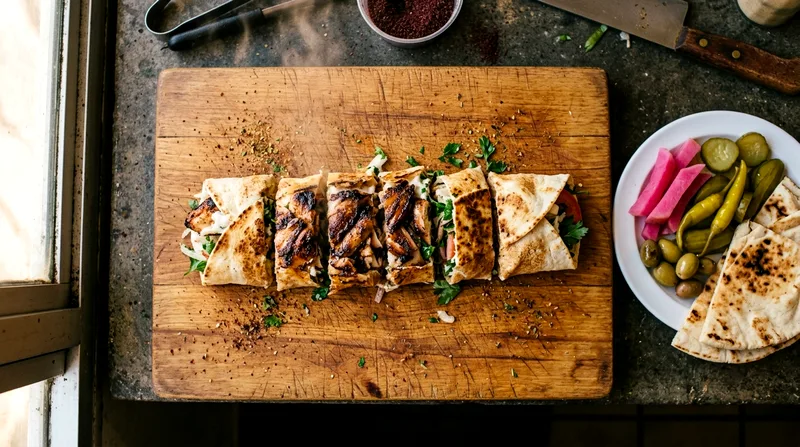
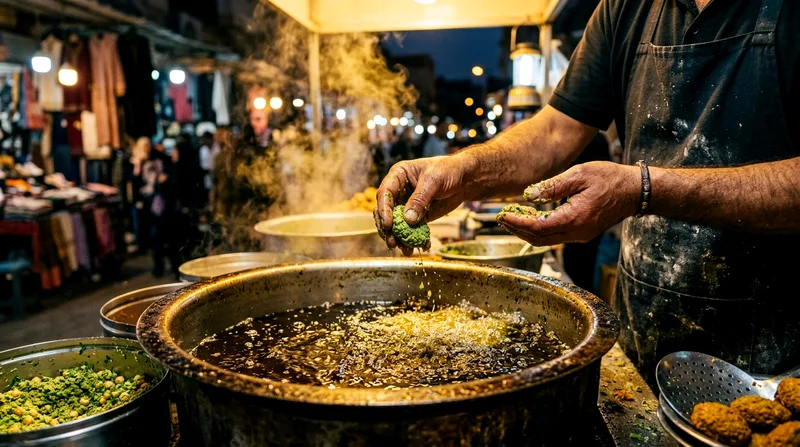
A typical tour stop involves two to four vendors, each offering a small taste rather than a full portion — think a few bites of shawarma, a piece of falafel, a cup of lentil soup, a mini plate of hummus with warm bread. You won't leave stuffed from any single stop, but by the end of a three-hour tour across four or five stops, most people are genuinely full. Karak tea (strong, sweetened, spiced milk tea) shows up on nearly every itinerary and is usually included free. Be cautious of tours advertising "unlimited tastings" — in practice this almost always means a fixed set menu, not an open buffet, so don't book expecting to graze indefinitely.
Local Guide Expertise and Cultural Context
The guide is what separates a good tour from a mediocre one. A strong guide explains why a dish exists — the Persian, Indian, and Levantine influences that shaped Emirati street food — rather than just naming ingredients. Ask, before booking, whether the guide is Emirati or long-term resident versus a rotating freelancer; reviews on TripAdvisor and Viator usually flag this directly, with phrases like "our guide grew up in this neighborhood" carrying real weight. Weak tours read from a script and rush between stops. If reviews mention rushing or a guide checking their phone, skip it regardless of the route.
How to Book and What to Look For
Booking platforms like Viator and TripAdvisor Experiences list most publicly available Abu Dhabi street food tours, and some hotel concierge desks — including Marriott Activities desks — can arrange similar walks, sometimes branded under local operators like Ramsa Abu Dhabi. Booking direct through a hotel concierge can be convenient but usually costs more than booking the same tour yourself online.
Group Size, Duration, and Cancellation Policies
Check the stated maximum group size before booking — listings sometimes say "small group" but cap at fifteen, which isn't small for a walking food tour. Look for tours capped at ten or under if you want real guide interaction. Duration should be stated clearly; if a listing just says "half-day" without hours, message the operator before booking. Cancellation policies on Viator and similar platforms typically allow free cancellation up to 24 hours before the start time, but some smaller independent operators enforce 48 or 72 hours — always check this before you pay, not after.
Dietary Accommodations and Accessibility Options
Vegetarian options are generally easy to arrange given the heavy use of legumes, bread, and dairy in Emirati and regional cuisine — most operators can accommodate with a day's notice. Vegan and gluten-free requests are harder; message the operator directly rather than relying on a generic "dietary options available" tag, since fried dough and wheat-based breads appear constantly. Halal is the default across nearly every stop, which simplifies things for most travelers. Accessibility is the weak point of this entire category — cobbled souk alleys, uneven curbs, and standing-heavy stops make these tours difficult for wheelchair users or anyone with limited mobility. If that's a concern, ask specifically about route terrain before booking rather than assuming "walking tour" means flat, paved ground.
Best Time to Book Your Tour
Seasonally, October through April is the strongest window — comfortable evening temperatures (typically 20-28°C) make the walking portions pleasant rather than something to endure. Booking during July and August isn't impossible, since tours shift to later evening starts, but daytime heat above 40°C limits any half-day option and some outdoor souk stalls reduce hours. For timing within your trip, book your street food tour for one of your first two nights in Abu Dhabi rather than your last — it gives you a working map of neighborhoods like the areas around Abu Dhabi Creek, which makes the rest of your trip, including day trips to Al Ain or a stop in Sharjah, easier to plan around meals you already know you like. Weekday evenings (Sunday to Wednesday in the UAE workweek) tend to have smaller groups than Thursday and Friday nights, when demand spikes. Book at least three to five days ahead in peak season (November to March); walk-up availability shrinks fast for the better-reviewed small-group tours.
Frequently asked questions
What dishes will I taste on an Abu Dhabi street food tour?
Expect machboos (spiced rice with meat or fish), regag bread, luqaimat (fried dough with date syrup), shawarma, falafel, hummus, and karak tea. Many tours also include South Asian or Persian dishes, reflecting Abu Dhabi's resident population rather than a purely "Emirati-only" menu. Portions are tasting-size, not full meals, across four to five stops.
Are street food tours suitable for dietary restrictions?
Vegetarian needs are usually easy to accommodate given the bread-and-legume-heavy menu, and halal is the default everywhere. Vegan and gluten-free diners should message the operator directly before booking, since fried dough and wheat bread appear at most stops and substitutions aren't always possible on short notice.
What is the typical group size for these tours?
Group tours booked through platforms like Viator or TripAdvisor typically run 8 to 15 people, though some operators cap at 10 for better guide interaction. Private tours let you book for just your own party, from one person up to six or more depending on the operator.
How long do Abu Dhabi street food tours usually last?
Most walking food tours run two to three hours, covering 1.5 to 3 kilometers across three to five food stops. Half-day versions combining souk shopping with tastings can run three to four hours. Always check the listed duration against the number of stops — a 3-hour tour with only two stops suggests a lot of walking and waiting between them.
What is the best time to book a street food tour?
October through April offers the most comfortable walking conditions, with evening temperatures around 20-28°C. Book three to five days ahead during peak season (November-March), and choose weekday evenings over Thursday or Friday nights if you want a smaller group and more guide attention.