Explore Abu Dhabi's gold souk at Madinat Zayed. Learn bargaining tips, quality checks, pricing, and whether guided tours suit first-time visitors.
What Is the Abu Dhabi Gold Souk?
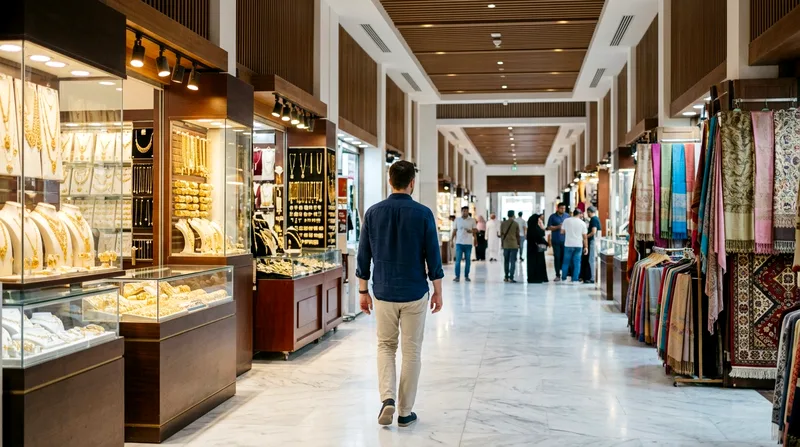
The Abu Dhabi gold souk isn't a standalone alley of stalls like you might picture from old photographs of Gulf markets. It's concentrated inside and around the Madinat Zayed Shopping Centre, a mall-style complex in the heart of the city that houses dozens of independent jewelers alongside a scattering of smaller shops in the surrounding streets. If you've done the Dubai Gold Souk in Deira and expect an open-air covered market with a similar atmosphere, adjust your expectations — Abu Dhabi's version is more air-conditioned retail arcade than traditional bazaar.
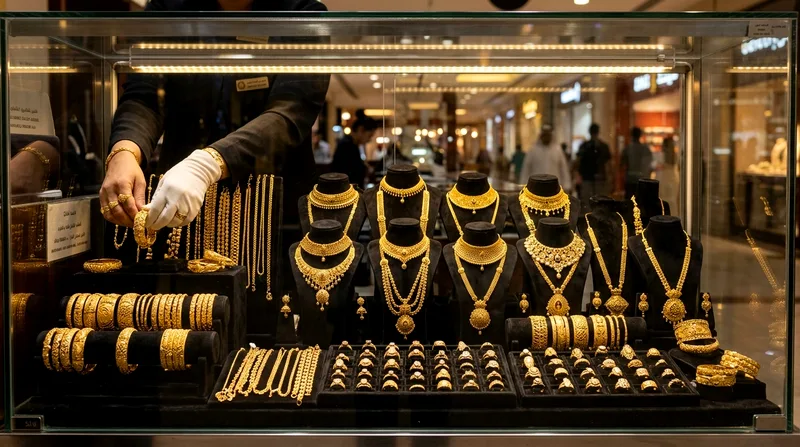
That doesn't make it less interesting, just different. You'll find everything from 22-karat Indian-style bridal sets to lighter, more minimalist 18-karat European-cut pieces, since the clientele here spans South Asian expatriate families buying wedding gold, Emirati shoppers after traditional designs, and tourists after something portable and tax-free. Big-name retailers like Joyalukkas operate storefronts here alongside smaller, family-run counters such as Al Mandoos Jewellery, which gives you a useful contrast between fixed-display chain pricing and the more negotiable independent shops.
Location and layout at Madinat Zayed
Madinat Zayed Shopping Centre sits on Hazza Bin Zayed Street, roughly a 10-minute drive from the Corniche and about 15 minutes from Sheikh Zayed Grand Mosque, depending on traffic. The gold trading area occupies a dedicated wing of the mall, with shops arranged in a grid so you can walk past window displays quickly and compare without committing to a conversation. This matters practically: unlike a bazaar where sellers call out, here you browse at your own pace and only engage once you step inside a shop. Parking is available on-site and it's a flat, easy walk from the nearest bus stops if you're relying on public transport rather than a taxi.
Why visitors choose the Abu Dhabi souk
Most visitors land here for one of two reasons: either they want traditional, heavier gold jewelry at prices lower than back home, or they're combining a cultural outing with shopping before or after Emirates Palace and the mosque. Reviews on Tripadvisor and travel blogs like Wanderlog consistently mention the lower pressure compared to Dubai's busier souk — fewer touts, more browsing room. I'd say that's fair; it feels less frantic, though it also means slightly less street theater if that's part of what you're after.
Independent vs. Guided Tour: Which Suits You?
There's no ticket gate here, so the real decision isn't about access — it's about whether you want a guide managing introductions and translation, or whether you'd rather wander in cold. Both approaches work. Which suits you depends on how comfortable you are negotiating with strangers and how much you already know about gold purity standards.
A guided tour costs more but removes the guesswork for first-time buyers unfamiliar with hallmarks and negotiation.
Abu Dhabi gold souk: independent shopping vs. guided tour compared
| Approach | Typical Cost | Negotiation Support | Best For | Time Needed |
|---|---|---|---|---|
| Independent visit | Free (just purchase cost) | None — self-negotiated | Confident bargainers, repeat visitors | 1-2 hours |
| Guided gold souk tour | Paid tour fee, varies by operator | Guide assists or negotiates | First-timers, seniors, families | 2-3 hours (often bundled with mosque/Corniche) |
| Dubai Gold Souk (comparison) | Free entry | None, high tourist traffic | Larger selection, more atmosphere | 1-2 hours |
| Chain retailer (e.g., Joyalukkas) | Fixed/display pricing | Limited, small discounts possible | Buyers wanting certainty over haggling | 30-45 minutes |
Costs and tour inclusions vary by operator and season, so check current prices and itineraries before booking.
Shopping independently: pros and cons
Going alone costs nothing extra and lets you set your own pace — no one hustling you toward a particular shop because of a commission arrangement. The downside: without local knowledge, you won't always know which shops are known for fair pricing versus which mark up heavily for tourists. You also lose the language bridge; most shopkeepers speak functional English, but nuanced negotiation sometimes goes smoother with a local intermediary. If you're a confident negotiator who's done research on the day's gold rate (published daily and worth checking before you go), independent shopping is perfectly fine and probably cheaper overall since you're not paying for a tour.
Guided tour benefits for first-timers
An Abu Dhabi gold market tour, usually bundled with a broader city tour covering Sheikh Zayed Grand Mosque and the Corniche, adds a guide who can explain hallmark stamps, steer you toward reputable counters, and sometimes negotiate on your behalf. For solo travelers or seniors uneasy about haggling, or families who'd rather not spend an hour debating price per gram with a shopkeeper, this removes friction. The trade-off is cost and a fixed schedule — you're on someone else's clock, and some tours funnel you toward shops paying referral commissions, which can inflate prices rather than lower them. Ask directly whether the guide earns commission from specific shops before booking, and compare current gold souk tour options and prices before deciding.
Entry, Tickets & Practical Information
There's no admission fee and no ticket to buy — this is a retail district, not an attraction with a gate. That said, "free entry" doesn't mean there's nothing to plan around.
Payment methods and currency
Cash in UAE dirhams gets you the best negotiating use — card payments sometimes carry a small surcharge (often 2-3%) that shops pass on, and that surcharge is rarely up for discussion. Larger, established retailers like Joyalukkas accept major cards without issue, while smaller independent counters may prefer cash or even accept other Gulf currencies informally. Keep your passport or an ID copy handy; large purchases occasionally require ID for invoicing, particularly if you're planning to claim VAT refunds at the airport on departure, which UAE allows for eligible tourist purchases above a minimum threshold.
Bargaining Tips & Quality Verification
This is where the souk experience either pays off or goes sideways, and it's the section worth reading twice before you go.
Negotiation tactics and price expectations
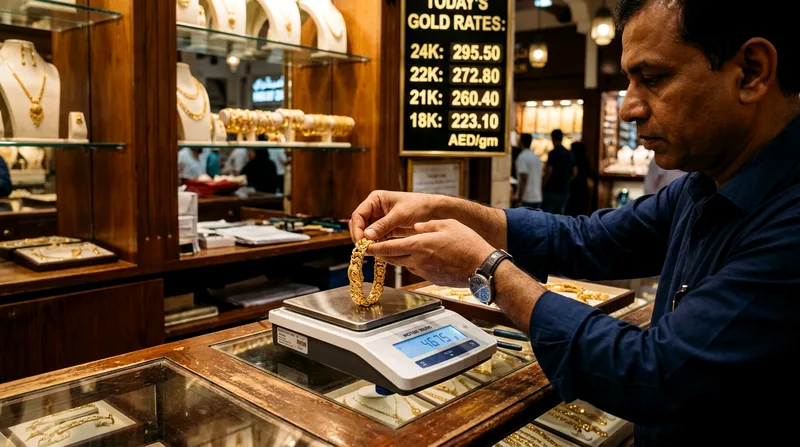
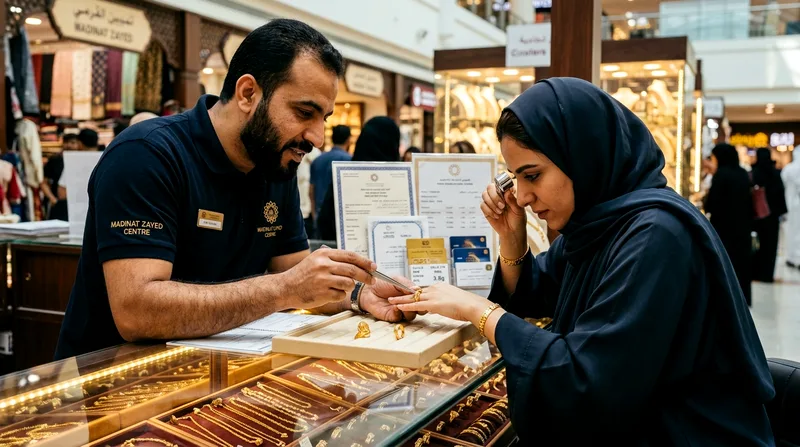
Gold jewelry pricing here breaks into two components: the gold's weight value, pegged to the international daily gold rate, and the "making charge" — the labor and design premium, which is the only part genuinely open to negotiation. Don't try to haggle over the gold weight itself; that's fixed and transparent, usually displayed on a board near the counter. Instead, negotiate the making charge, which can often be reduced by 10-20%, sometimes more on simpler designs bought in bulk (say, matching bangles). Visiting two or three shops before committing gives you use — mention you've seen a similar piece priced lower elsewhere, and most shopkeepers will adjust rather than lose the sale. Avoid the rookie mistake of negotiating loudly over the total price without separating gold value from making charges; it confuses the conversation and usually works against you.
Hallmarks, purity standards, and authenticity checks
Legitimate gold sold in the UAE carries a hallmark stamp indicating purity: 916 means 22-karat (91.6% pure), 750 means 18-karat, and 585 denotes 14-karat. The UAE enforces these standards fairly strictly through its municipal and economic development authorities, which is part of why the market has a reasonably trustworthy reputation compared to some unregulated markets elsewhere. Always ask to see the hallmark stamp on the piece itself, not just the certificate, and request a receipt that states karat, weight, and making charge separately. If a shop is reluctant to itemize this, walk away — reputable dealers, including the well-known chains, itemize as standard practice.
Best Times to Visit & Nearby Add-Ons
Timing your visit well makes the difference between a relaxed browse and a rushed, half-closed experience.
Crowd patterns and ideal visiting windows
Weekday evenings, especially Tuesday through Thursday after 6:00 PM, tend to be calmer than weekends, when Friday and Saturday evenings draw families doing their regular shopping alongside tourists. If you want shopkeepers' full attention for a serious negotiation, early evening on a weekday — before the after-dinner rush — is your best window. Avoid the midday heat lull (1:00–4:00 PM) mentioned earlier; several shops close, and the ones that remain open are often quieter because there's simply less foot traffic.
Nearby attractions and shopping extensions
Madinat Zayed sits close enough to major landmarks that it's easy to fold into a half-day itinerary. Pair it with Sheikh Zayed Grand Mosque in the morning, lunch near Emirates Palace, and finish with gold shopping in the late afternoon before a sunset walk along Corniche Beach. If you're staying longer in the region and want a cultural contrast, Al Fahidi District in Dubai offers a more historic, wind-tower architecture backdrop, while the Dubai Gold Souk itself is worth comparing directly — it's larger and more tourist-oriented, with higher foot traffic but also, often, higher making charges due to that tourist volume. Travelers continuing on to Al Ain or Sharjah will find smaller, quieter gold markets there, useful for comparison shopping but with far less selection.
Frequently asked questions
Is it cheaper to buy gold in Abu Dhabi?
Generally, yes relative to many Western markets, because the UAE has no import duty on gold and a competitive retail scene keeps making charges reasonable. Compared to Dubai specifically, prices are often similar since both follow the same daily gold rate, but Abu Dhabi's slightly lower tourist volume sometimes means smaller making-charge markups. The real savings come from negotiating the making charge, not the gold rate itself, which is fixed daily and not up for discussion.
How do I verify gold authenticity at the souk?
Check for the hallmark stamp on the piece — 916 for 22-karat, 750 for 18-karat, 585 for 14-karat — and ask for an itemized receipt listing karat, weight, and making charge separately. The UAE regulates gold purity standards fairly strictly, so reputable shops, including chains like Joyalukkas and established independents like Al Mandoos Jewellery, will provide this without hesitation. If a seller refuses or seems vague about the hallmark, treat that as a red flag and shop elsewhere.
Should I book a guided tour or shop independently?
Book a guided tour if you're a first-time buyer unfamiliar with purity standards and uncomfortable negotiating, especially if you're combining it with sightseeing at the Grand Mosque or Emirates Palace. Shop independently if you're confident negotiating and want to control your own schedule without paying a tour fee — it's free and often just as effective with a bit of homework on the day's gold rate.
What are typical price ranges for gold jewelry?
Pricing depends almost entirely on weight and the day's gold rate, plus a making charge that typically adds a percentage on top — often more for intricate 22-karat bridal pieces than for simple 18-karat everyday jewelry. Rather than quoting a fixed figure, check the daily gold rate posted in-shop and calculate from there; it changes daily and any number given in isolation becomes outdated fast.
Where exactly is the Abu Dhabi gold souk located?
It's centered on the Madinat Zayed Shopping Centre on Hazza Bin Zayed Street, roughly 10 minutes from the Corniche and about 15 minutes from Sheikh Zayed Grand Mosque by car. The mall has a dedicated gold trading wing with dozens of shops, plus a handful of additional jewelers in the immediate surrounding streets.