This Abu Dhabi neighbourhoods guide breaks down the city's islands, downtown, and waterfront areas to help you find attractions and the best base.
Island Neighbourhoods: Culture and Leisure
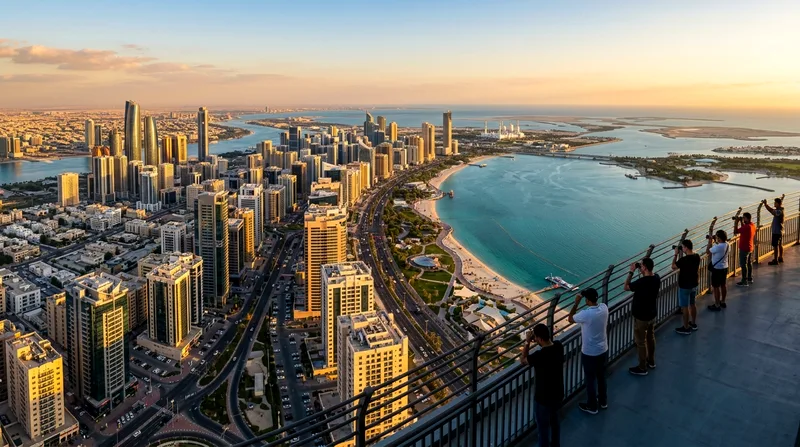
Any Abu Dhabi neighbourhoods guide has to start with the islands, because that's how the city is actually organised. Unlike Dubai, which sprawls along a coastal strip you can traverse by metro in a fairly linear way, Abu Dhabi is a constellation of reclaimed and natural islands connected by bridges and highways. Saadiyat and Yas are the two that most visitors weigh against each other, and they serve very different trips.
Saadiyat Island is the cultural and beach-focused choice. Yas Island is the entertainment and theme-park choice. Picking between them isn't really about quality — both are well-built, well-maintained developments — it's about what you want your mornings to look like. I'd steer couples and culture-focused travelers toward Saadiyat, and families with kids under 14 toward Yas, almost without exception.
Saadiyat suits culture and beach trips, Yas suits theme-park families, and downtown suits travelers who want walkable, local sightseeing on a tighter budget.
Abu Dhabi neighbourhoods guide: comparing the main areas by attractions, cost, and best use
| Neighbourhood | Best For | Typical Hotel Cost | Distance to Airport | Walkability |
|---|---|---|---|---|
| Saadiyat Island | Museums, beach, quiet luxury | High | Approx. 25 min | Good within island |
| Yas Island | Theme parks, families, motorsport | Mid to high | Approx. 20 min | Good within clusters |
| Downtown Abu Dhabi | Mosque, culture, local life | Mid | Approx. 30 min | Very good |
| Reem Island | Residential, dining, contrast trip | Mid | Approx. 30 min | Moderate |
| Corniche area | Beach walks, dining, orientation | Mid to high | Approx. 25-30 min | Excellent |
| Al Raha / Al Muneera | Longer stays, families, quiet base | Low to mid | Approx. 15 min | Low, car needed |
| Al Reef / Al Rayyana | Budget longer stays | Low | Approx. 30-35 min | Low, car needed |
Figures are typical ranges for planning purposes; always check current prices and routes when booking, as traffic and seasonal rates vary.
Saadiyat Island museums and beaches
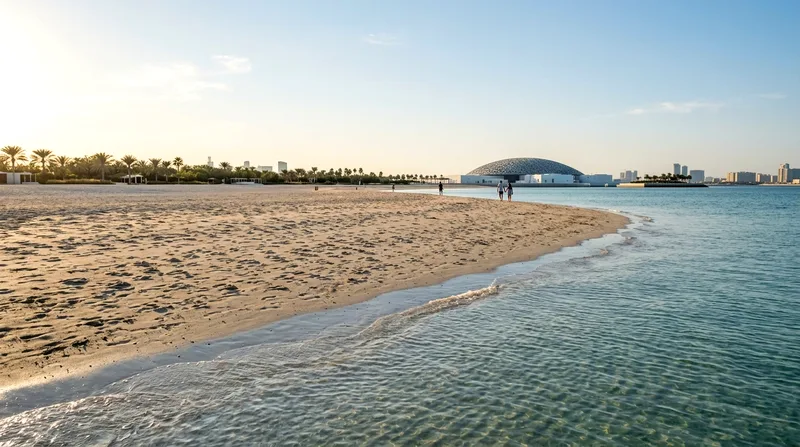
Saadiyat holds the Louvre Abu Dhabi, with its photogenic perforated dome roof, and is slated to eventually house Zayed National Museum and a Guggenheim outpost, though only the Louvre is open to visitors currently. Entry to the Louvre runs around AED 63 for adults, and it's worth two to three hours minimum — the collection spans ancient artefacts to contemporary art, which is unusual for a single museum. Saadiyat Beach itself is public and free, with calm, shallow water that's genuinely good for young swimmers, unlike some of the rougher patches along Yas. The island also has a cluster of five-star resorts — think Saadiyat Rotana, Park Hyatt — so it suits travelers who want quiet beach time with a cultural half-day bolted on, rather than non-stop activity. There's no real nightlife here, and that's deliberate.
Yas Island entertainment and attractions
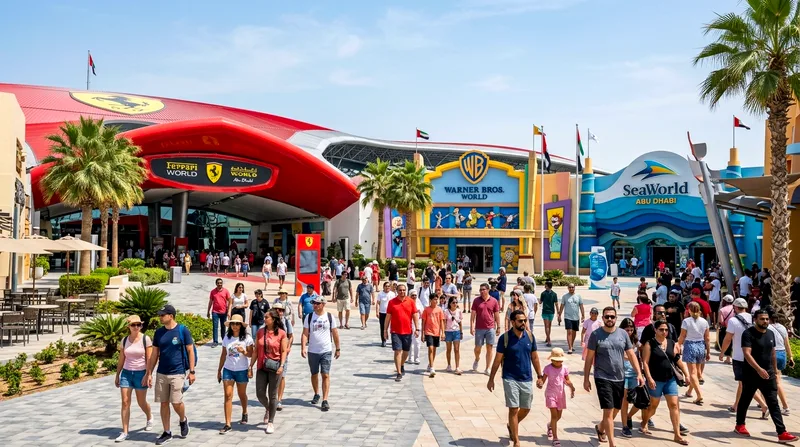
Yas Island is where the big-ticket attractions sit: Ferrari World, Yas Waterworld, Warner Bros. World, and the Yas Marina Circuit, home of the Abu Dhabi Grand Prix each autumn. It's also got Yas Mall, one of the larger shopping centres in the emirate, and a growing strip of mid-range hotels that are noticeably cheaper than equivalent properties on Saadiyat or the Corniche. If you're traveling with kids and want to do two or three theme parks back to back, basing yourself here saves real time — walking between Ferrari World and Yas Waterworld takes about 10 minutes. The trade-off is that Yas feels more like a resort complex than a neighbourhood; there's limited street life outside the attraction zones, and dinner options skew toward chain restaurants inside the mall.
Downtown and Modern Districts
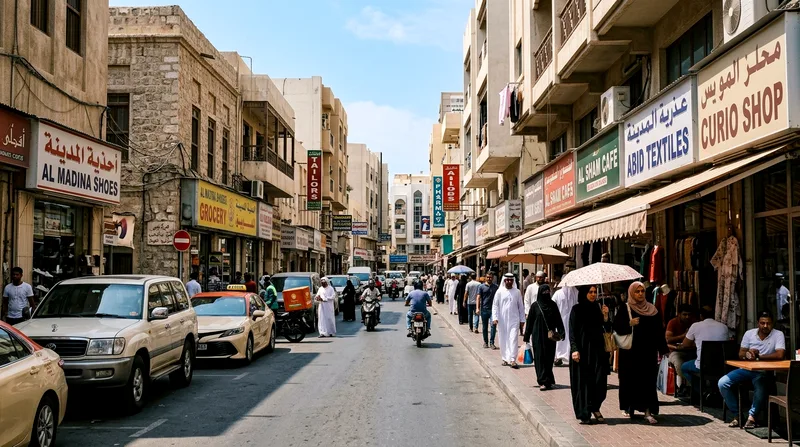
Downtown Abu Dhabi — sometimes called Abu Dhabi Island's central business district — is the closest thing the city has to a traditional urban core, with a grid of streets, older low-rise buildings mixed with towers, and a density of shops and cafés you won't find on the newer islands. It's less polished than Yas or Saadiyat, and that's partly its appeal: this is where you see daily Emirati and expat life rather than a curated resort experience.
Reem Island, just across a short bridge from downtown, is the newer, glossier alternative — closer in feel to Dubai Marina than to old Abu Dhabi. If you want contrast within a single trip, splitting two nights between downtown and Reem gives a reasonable sense of the city's range.
Downtown Abu Dhabi landmarks
The Sheikh Zayed Grand Mosque sits at the edge of downtown's reach and is free to enter outside of prayer times, though women need an abaya (provided on loan at the entrance) and modest dress is required for everyone. Qasr Al Hosn, the oldest stone building in the city, and the Cultural Foundation nearby are both walkable from the same general area and make for a half-day of low-cost sightseeing. Downtown is also where you'll find the Corniche's eastern end and the dense cluster of mid-range hotels — this is generally the most practical base if you want to combine the mosque, the Corniche, and some local souks without constant taxi rides.
Reem Island development
Reem Island is almost entirely residential towers and retail podiums, built over the last 15 years, with Shams Abu Dhabi and City of Lights as its main sub-zones. It's popular with expat families and young professionals rather than short-stay tourists, but it's worth knowing about because of its waterfront promenade (Reem Central Park) and a growing restaurant scene along the boardwalk that's less touristy — and often cheaper — than equivalent spots on the Corniche. If you're the kind of traveler who likes seeing where locals actually live rather than only visiting attraction zones, an evening here is more interesting than another night in a hotel restaurant.
Waterfront and Corniche Areas
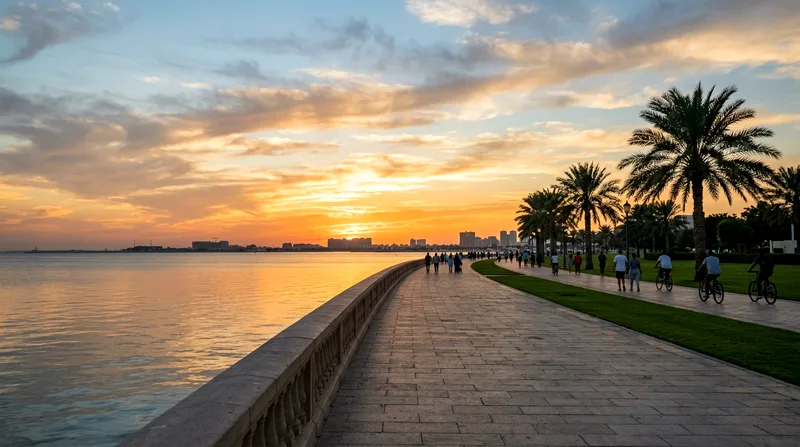
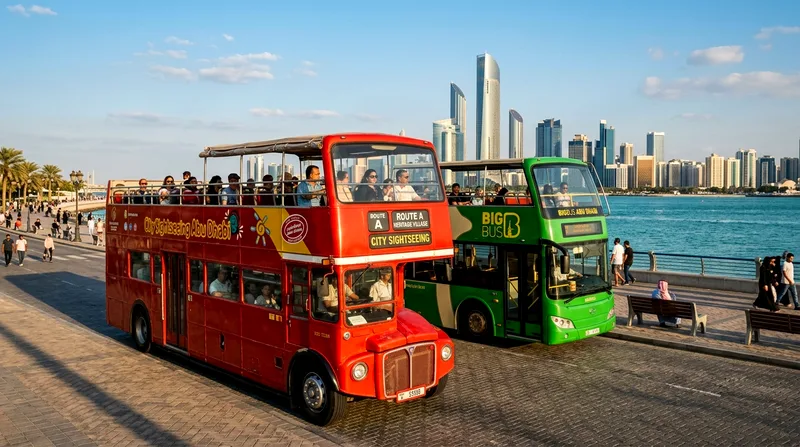
The Corniche is the eight-kilometre stretch of waterfront promenade and beach running along the northwest edge of Abu Dhabi Island, and it's arguably the single best orientation point in the city — most first-time visitors end up here at least once, whether for a run, a sunset walk, or dinner.
Corniche Beach and promenades
Corniche Beach is a managed, Blue Flag-certified public beach with lifeguards, showers, and shaded seating areas; entry costs a small fee (roughly AED 10 on weekdays, more on weekends) which keeps it cleaner and less crowded than fully free beaches elsewhere. The cycling and walking track that runs the length of the Corniche is separated from road traffic, which makes it genuinely pleasant for families with strollers or older travelers who want flat, well-lit walking routes in the evening. Compare that to Dubai's Jumeirah Beach stretch, which is longer but far more built-up and commercial — the Corniche feels calmer and more park-like.
Dining and entertainment clusters
Dining along the Corniche splits into two tiers: casual kiosks and cafés directly on the promenade, and the more formal restaurants in the hotels set back from it, including several with good Gulf and Lebanese food. Al Maryah Island, just inland, adds a denser retail and dining cluster — The Galleria mall there is the luxury shopping anchor for Abu Dhabi, comparable in ambition (if not quite in scale) to Dubai Mall. If you're prioritising nightlife, know upfront that Abu Dhabi's scene is quieter and more hotel-bar-centric than Dubai's — don't come expecting a club scene to rival JBR or Downtown Dubai.
Residential Neighbourhoods for Visitors
Beyond the main tourist islands, several residential communities on and near Abu Dhabi Island are worth knowing about if you're staying longer than a few days, visiting family, or just want a quieter, more local base with easy highway access to the main attractions.
Family-friendly areas
Al Raha and Al Muneera, both part of the broader Al Raha Beach development near the airport road, are popular with expat families for their canal-front apartments, playgrounds, and relatively calm pace. Al Zeina, next door, has a similar profile with a small retail strip and beach access. None of these are tourist destinations in themselves, but if you've got relatives in Abu Dhabi or you're booking a serviced apartment for a week-plus stay, they're considerably quieter than downtown and still only 20–25 minutes by car from Yas Island or the airport. The trade-off is you'll need a car or regular taxis — there's little within comfortable walking distance.
Budget-conscious options
Al Reef and Al Rayyana, further out toward the Abu Dhabi–Dubai highway, offer villa-style and apartment accommodation at noticeably lower rates than anything on Saadiyat, Yas, or the Corniche — useful if you're on a longer stay and renting rather than booking hotel nights. The catch is distance: Al Reef sits roughly 25–30 minutes from the main tourist islands by car, with no direct bus service to most attractions, so you're committing to taxis, ride-hailing, or a rental car for the whole trip. For a short city break, I wouldn't recommend it; for a month-long stay where you're treating Abu Dhabi more like Doha or Muscat — a base for occasional day trips rather than a packed sightseeing itinerary — it makes more financial sense.
Getting Around: Neighbourhood Connectivity
This is the part most guides skip, and it's the part that actually determines whether your itinerary works. Abu Dhabi doesn't have a metro or tram system, unlike Dubai, so connectivity between neighbourhoods depends on roads, taxis, and a limited public bus network.
Transport links between districts
Taxis are metered, reasonably priced, and the default way most visitors move between islands — expect AED 40–70 for a one-way trip between, say, downtown and Yas Island depending on traffic. Ride-hailing apps work reliably across the emirate. The public bus network connects the main islands too, and a few routes run directly between Yas Island, Saadiyat, and the city centre, but frequency is lower than you'd get in Dubai, often 30–40 minutes between buses on some routes, so build in buffer time. If your itinerary involves hopping between three or more islands in a single day — say, mosque in the morning, Louvre at midday, Ferrari World in the afternoon — you're looking at a minimum of two hours of combined transit, which is worth factoring in before you book same-day tickets for multiple attractions.
Walking and accessibility
Within individual neighbourhoods, walkability varies sharply. The Corniche and downtown are genuinely pedestrian-friendly, with shaded paths and flat pavements — useful for senior travelers or anyone avoiding taxis for short hops. Yas Island and Saadiyat are walkable within their own attraction clusters but not between them; the distances and heat (summer temperatures regularly exceed 40°C) make walking between, say, a Yas hotel and Ferrari World fine, but walking from Yas to Saadiyat is not realistic at any time of year. Al Reef and the outer residential areas aren't designed for pedestrians at all — there's little shade infrastructure and pavements are inconsistent, so factor that in if mobility is a concern.
Frequently asked questions
Which Abu Dhabi neighbourhood has the best attractions?
It depends on the attraction type. Saadiyat Island has the Louvre Abu Dhabi and the best public beach for swimming; Yas Island has Ferrari World, Yas Waterworld, Warner Bros. World, and the Grand Prix circuit; downtown has the Sheikh Zayed Grand Mosque and Qasr Al Hosn. Most first-time visitors end up splitting time across at least two of these three.
Where should tourists stay in Abu Dhabi?
For a first visit of three to five days, downtown or the Corniche gives the most balanced access — walkable sights plus reasonable transit to Yas and Saadiyat. Families focused on theme parks should base on Yas Island itself to cut transit time between attractions. Couples prioritising beach and museums should look at Saadiyat.
What are the main island neighbourhoods?
Abu Dhabi's core island neighbourhoods are Abu Dhabi Island itself (downtown, Corniche, Al Maryah), Saadiyat Island, Yas Island, and Reem Island. Each is connected by bridge and highway rather than metro, so plan transit time between them rather than assuming quick hops.
Which neighbourhoods are most walkable?
The Corniche and downtown Abu Dhabi are the most walkable, with shaded, flat promenades and a dense grid of streets. Yas Island and Saadiyat are walkable within their own attraction or beach clusters but not between each other. Outer residential areas like Al Reef are not pedestrian-friendly and require a car.
What's the difference between Saadiyat and Yas Island?
Saadiyat is built around museums, a calm public beach, and quiet luxury resorts — it has no theme parks and limited nightlife. Yas Island is an entertainment hub with Ferrari World, Yas Waterworld, Warner Bros. World, the F1 circuit, and a large mall, aimed squarely at families and groups wanting activity-packed days.